Well pressure tank repair and replacement in Tifton and Tift County
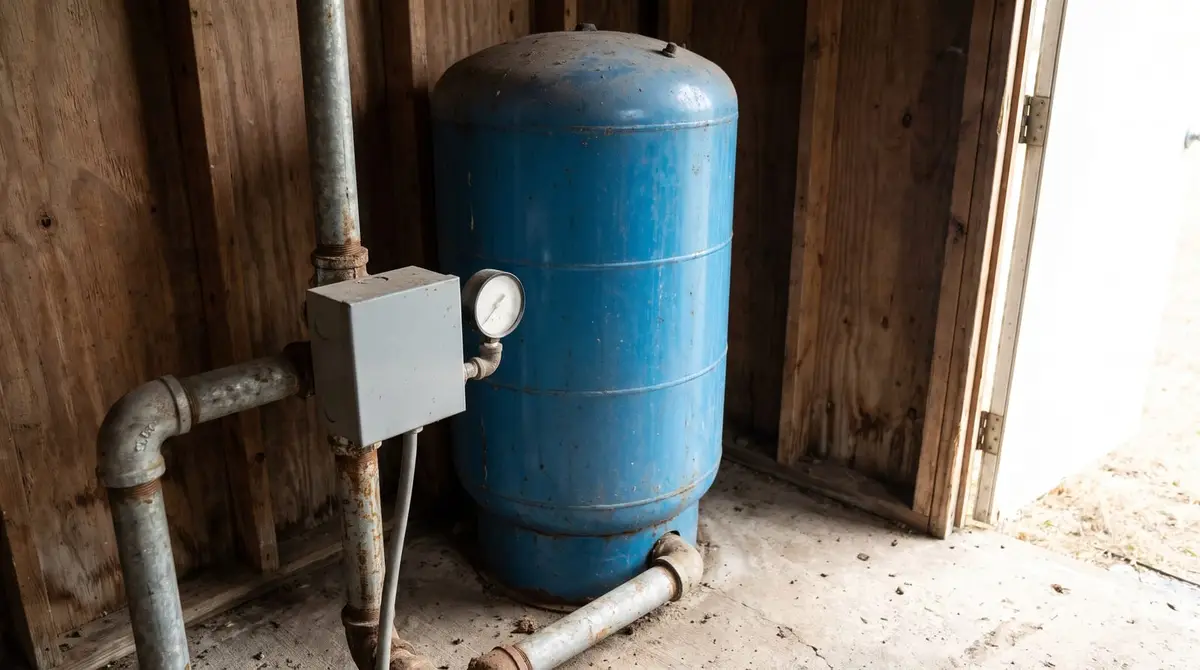
The pressure tank is the cushion between your pump and your faucets. It stores water under a pocket of compressed air, so a glass of water or a quick hand wash comes out of the tank instead of starting the pump. When the air is gone, the pump starts every time a tap opens, and that is the fastest way to wear one out. As a rough 2026 Georgia guide, a new tank runs about $300 to $800, tank and labor, far less than the pump it protects.
Call (229) 520-5205Rather not call? Send the detailsCalls are answered 24/7. Weekdays 9 to 6 you may be put straight through to a local pro. Nights and weekends, if it can't wait, say so and we'll ring a local pro right away; otherwise a local pro will call you back the next business morning.
What are the signs of a bad pressure tank?
- Rapid clicking: With one faucet open, the pump starts and stops every few seconds instead of running a minute or more.
- Pulsing pressure: The shower goes strong, weak, strong again in a steady rhythm.
- Water at the air valve: With the power off and the tank drained, a press on the valve stem on top gives water instead of air. The rubber bladder inside has split.
- A rusting shell: Rust at the seams or bottom, or a steady drip under the tank, means it is near the end.
Can a pressure tank be recharged instead of replaced?
If the bladder is sound and the tank has only lost air, yes. Pentair's tank manual sets the air with the tank empty:
- Cut the power: Switch off the well breaker.
- Empty it: Run a faucet until water stops and the gauge reads zero.
- Set the air: Pump or bleed air at the valve on top until it reads 2 psi under the pump's start pressure: 28 psi on a 30/50 switch, 38 psi on a 40/60.
- Watch a cycle: Power back on, let it fill, then open a tap and time how long the pump runs.
If the air will not hold, or water comes from the valve, the tank needs replacing.
Does sulfur water shorten a tank's life?
It can shorten the life of what is around it. UGA Extension says hydrogen sulfide, the gas behind rotten-egg water, is extremely corrosive to iron, steel, copper and brass. That covers a steel tank shell and the brass tee, gauge and fittings under it. If your water smells of sulfur, look at those parts whenever the tank is serviced. UGA notes hydrogen sulfide is hard to measure in a lab, so it is often tested on site.
How much does a pressure tank replacement cost in Tift County?
As a rough 2026 guide, SepticAndWell.com's Georgia survey puts a pressure tank replacement at $300 to $800, tank and labor, usually for a split bladder or a waterlogged tank. The same guide calls a new tank cheap protection for a pump that costs far more.
A larger tank costs more but lets the pump run longer and start fewer times a day. Franklin Electric, which makes many submersible motors, tells installers to size the tank and controls to keep starts as low as possible.
What happens when the tank is replaced?
- Shut down and drain: Power off at the breaker, a faucet open until the gauge reads zero.
- Out with the old: The old tank comes off the tank tee. The tee, gauge and drain valve are often replaced too, since they are cheap and corrode.
- Charge the new one: With the new tank empty, its air is set 2 psi below the pump's start pressure.
- Restart: The pump fills the tank, shuts off at the right number, and the pro checks for leaks.
On most homes it takes an hour or two.
What should I tell the pro about my tank?
Take a photo of the tank's label and of the gauge, and count how many seconds the pump runs with one faucet open. That tells the pro which tank and parts to bring.
Common questions
How do I know what size tank I have?
The label on the tank lists its model and capacity. If the label has faded, a photo and the tank's height and width help the pro identify it.
Can I check the tank air myself?
Yes. With the breaker off and the tank drained, a tire gauge on the air valve gives the reading. It should be 2 psi below the pump's start pressure.
Why does my new pump click on and off?
Most often the tank's air was never set to match the switch, or the old tank was kept and it is waterlogged. Check the tank before blaming the new pump.
Sources: Pentair, Pro-Source Plus steel pressure tanks manual (pre-charge) (source); UGA Extension Circular 858-8, Hydrogen sulfide and sulfate (2026) (source); Franklin Electric, Submersible motor application, installation and maintenance manual (source); SepticAndWell.com, Georgia well pump repair cost (updated April 10, 2026) (source).
Last reviewed November 11, 2026.
Rather not call? Send the details
A local well pump pro will call you back.